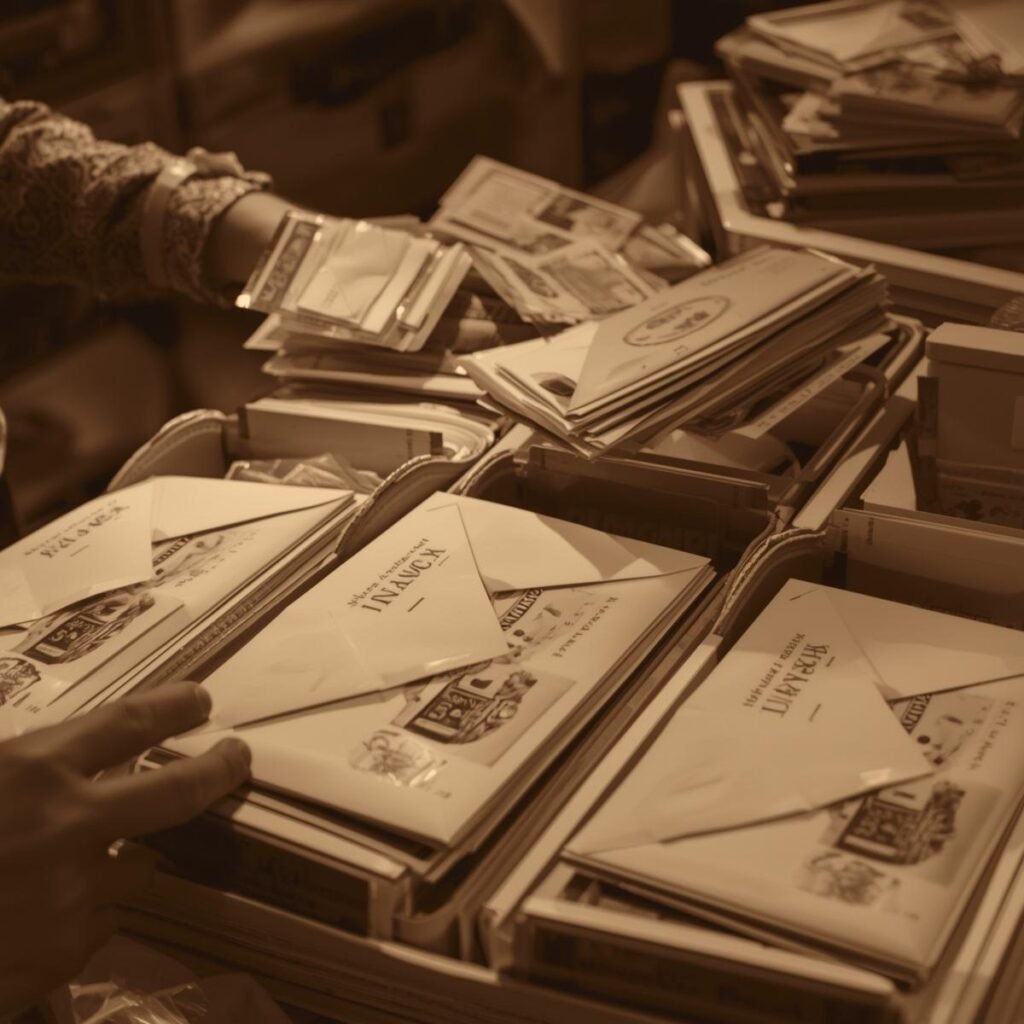

In today’s finance landscape, trends come and go—but some money habits stick around because they work. If you’ve scrolled through TikTok or Instagram Reels lately, you’ve probably seen it: a perfectly manicured hand sorting cash into colorful, labeled binders—groceries, rent, date night, self-care.
Groceries. Rent. Date Night. Self Care.
It’s called “Cash Stuffing,” and the hashtag has billions of views. But long before it was a viral trend, it was a gritty personal finance survival tactic known as the Envelope System—popularized decades ago and later formalized by budgeting experts like Dave Ramsey
👉 https://www.ramseysolutions.com/budgeting/envelope-system-explained
In an era where we can buy almost anything with a double-tap of our thumb, going back to physical paper money feels… regressive.
Is it actually efficient to carry wads of cash in 2025?
Or is this just an aesthetic trend that ignores the reality of online bill pay and digital subscriptions?
The answer is yes, no, and “it’s complicated.”
In this deep dive, we’ll explore:
- The science behind why cash works
- Why the pure envelope system often fails in modern life
- The Hybrid Strategy that actually works in today’s digital finance world

What Is the Envelope System? (The Basics)
The concept is deceptively simple. It forces you to stop focusing on your bank balance and start paying attention to your category balance.
How it works traditionally:
- Budget: Decide you have $400 for groceries this month
- Withdraw: Take $400 in cash from the ATM
- Stuff: Place the cash in an envelope labeled “Groceries”
- Spend: Use only that envelope at the store
The hard stop:
When the envelope is empty, spending stops.
It sounds primitive—but for people drowning in debt or struggling to save for an emergency fund, it often works when nothing else does
👉 https://www.investopedia.com/terms/e/envelope-budgeting.asp
The Neuroscience: Why “Cash Stuffing” Works
Your brain treats cash and cards very differently—and this isn’t opinion. It’s neuroscience.
Researchers from MIT and Carnegie Mellon University identified something called the “Pain of Paying.”
👉 https://www.mit.edu/~soman/papers/painofpay.pdf
What happens in your brain:
- Paying with Cash:
Handing over physical bills activates the insula—the part of the brain associated with pain and loss. You feel the spending. - Paying with Cards:
Credit and debit cards reduce this pain by separating the purchase from the payment. The transaction feels abstract.
The result:
Multiple studies show people spend 12%–18% more when using cards instead of cash
👉 https://www.apa.org/monitor/2014/02/spending
If you’re trying to fix broken personal finance habits, relying on plastic is like trying to diet while living in a bakery.
The Problem: The Digital Reality of 2025
So—cash wins, right?
Not entirely.
While cash is psychologically powerful, living 100% cash-based in 2025 introduces serious friction in the wrong places.
The three biggest problems:
- Online Bills:
You can’t stuff cash into your Netflix, Spotify, Amazon Prime, or utility bills. - Theft Risk:
Carrying large amounts of cash increases loss and theft risk, which the FBI consistently warns against
👉 https://www.fbi.gov/how-we-can-help-you/scams-and-safety/common-scams-and-crimes - No Digital Paper Trail:
Lost receipts mean lost accountability—bad for budgeting and dispute resolution.
This is where many cash-stuffing attempts fail. People try to force a 1950s system into a 2025 economy, get frustrated, and abandon budgeting entirely.
The Solution: The Hybrid Method (Digital + Cash)
The smartest modern finance strategy blends the psychology of cash with the convenience of digital banking.
Step 1: Keep Fixed Expenses Digital
Your fixed expenses don’t need envelopes:
- Rent or mortgage
- Insurance
- Utilities
- Phone bill
Automate these through your main checking account using auto-pay. This aligns with recommendations from the Consumer Financial Protection Bureau (CFPB)
👉 https://www.consumerfinance.gov/consumer-tools/budgeting/
Step 2: Use Cash for “Danger Categories”
Everyone has spending weak spots. Common ones include:
- Groceries / Target runs
- Dining out & bars
- Entertainment
- Clothing
The strategy:
Withdraw cash only for these categories.
If dining out is budgeted at $200, put $200 cash in your wallet. When it’s gone, you’re cooking at home. This applies the Pain of Paying exactly where impulse spending happens.
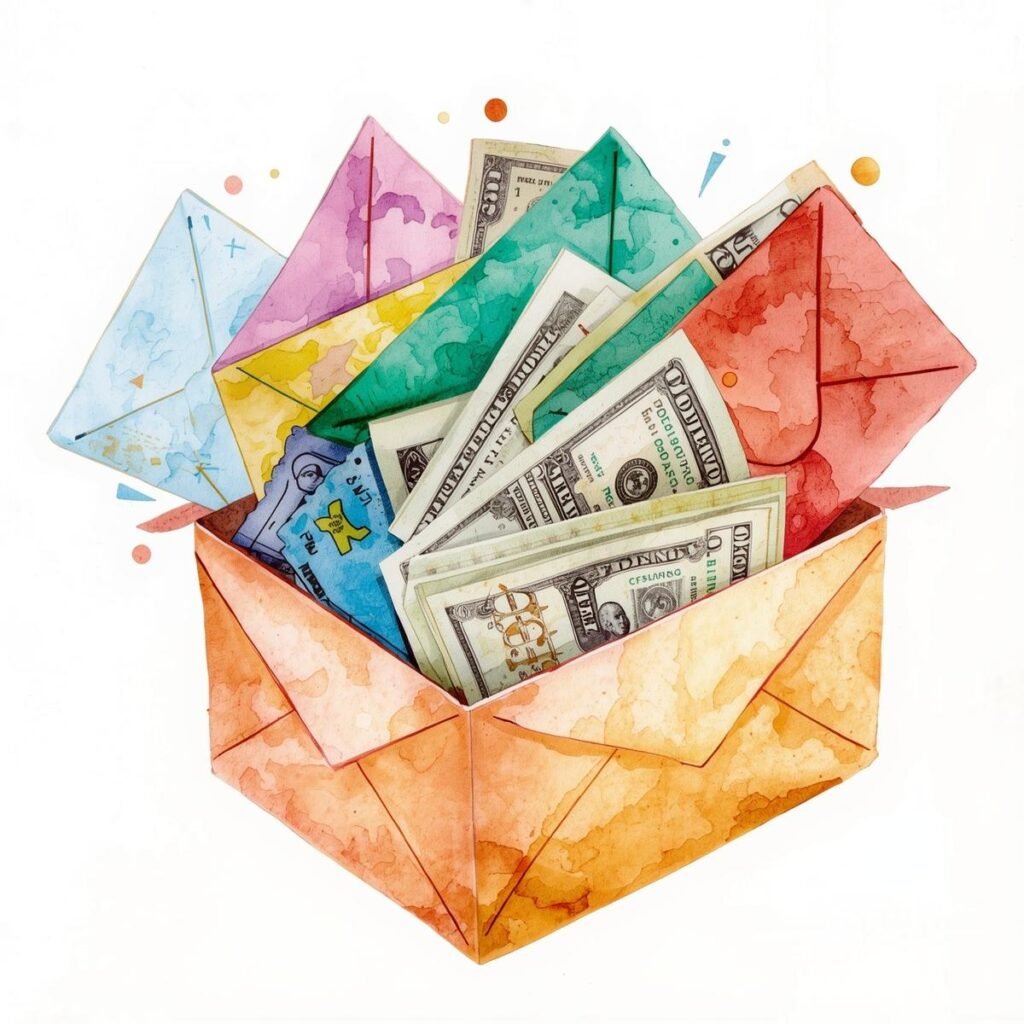
Step 3: The Digital Envelope Alternative
If you hate carrying cash but want discipline, technology can mimic envelopes.
Digital bank “buckets”
Many online banks let you create sub-accounts or “buckets” inside one account:
- Ally Bank’s Buckets
👉 https://www.ally.com/bank/interest-checking-account/ - SoFi’s Vaults
👉 https://www.sofi.com/money/
This allows visual separation of money without opening multiple accounts.
Budgeting apps
- YNAB (You Need A Budget) – Zero-based digital envelope system
👉 https://www.ynab.com - Goodbudget – Envelope budgeting without cash
👉 https://www.goodbudget.com
These tools are widely recommended by Investopedia for behavioral budgeting
👉 https://www.investopedia.com/best-budgeting-apps-5085400
Physical vs. Digital Envelopes (Quick Comparison)
| Feature | Physical Cash | Digital Envelopes |
|---|---|---|
| Spending Awareness | Very High | High |
| Theft Risk | Higher | Low |
| Online Bills | Impossible | Easy |
| Convenience | Medium | High |
| Best For | Impulse control | Hybrid budgeting |
Conclusion: It’s Not About Cash—It’s About Friction
Whether you use physical envelopes or digital buckets, the real power is friction.
Modern finance is designed to be frictionless:
- Apple Pay
- One-click checkout
- Buy Now, Pay Later
The Envelope System works because it forces you to:
- Pause
- Count
- Decide
My recommendation:
Try the Hybrid Method for 30 days.
Withdraw cash for groceries and dining out this month. Pay attention to how it changes your choices. Many people discover that the slight discomfort of handing over a $20 bill saves hundreds of dollars by month’s end.
Have you tried Cash Stuffing?
Did it help—or was it too much hassle?
Drop your experience in the comments 👇
Disclaimer: This content is for educational purposes only and does not constitute financial advice. Always consult a qualified financial professional before making major budgeting or financial decisions.